.jpg)
Support for Patients & Families
The Modern Approach to Supportive Cancer Care
Supportive cancer care has always been about more than treating symptoms. At its heart, it is about helping people feel supported throughout the uncertainty of illness.
Yet traditionally, much of cancer care has happened only during clinic visits. Between appointments, patients were often left to manage symptoms, interpret results, and navigate questions on their own.
Today, digital health tools are beginning to shift this pattern. Online access to health records, symptom reporting tools, and emerging AI technologies are helping create new ways for patients and care teams to stay connected.
Used thoughtfully, these tools have the potential to strengthen supportive care — making it more proactive, responsive, and centered on the needs of patients and families.
Digital Symptom Tracking
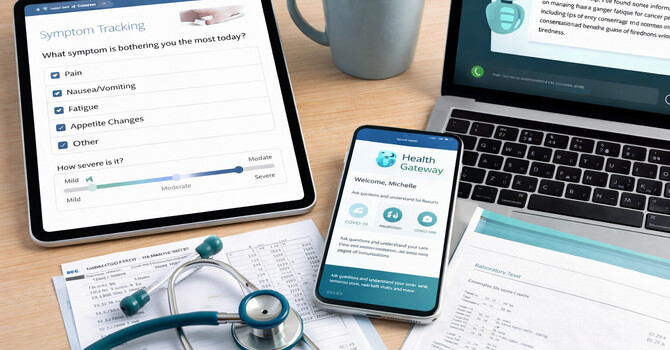
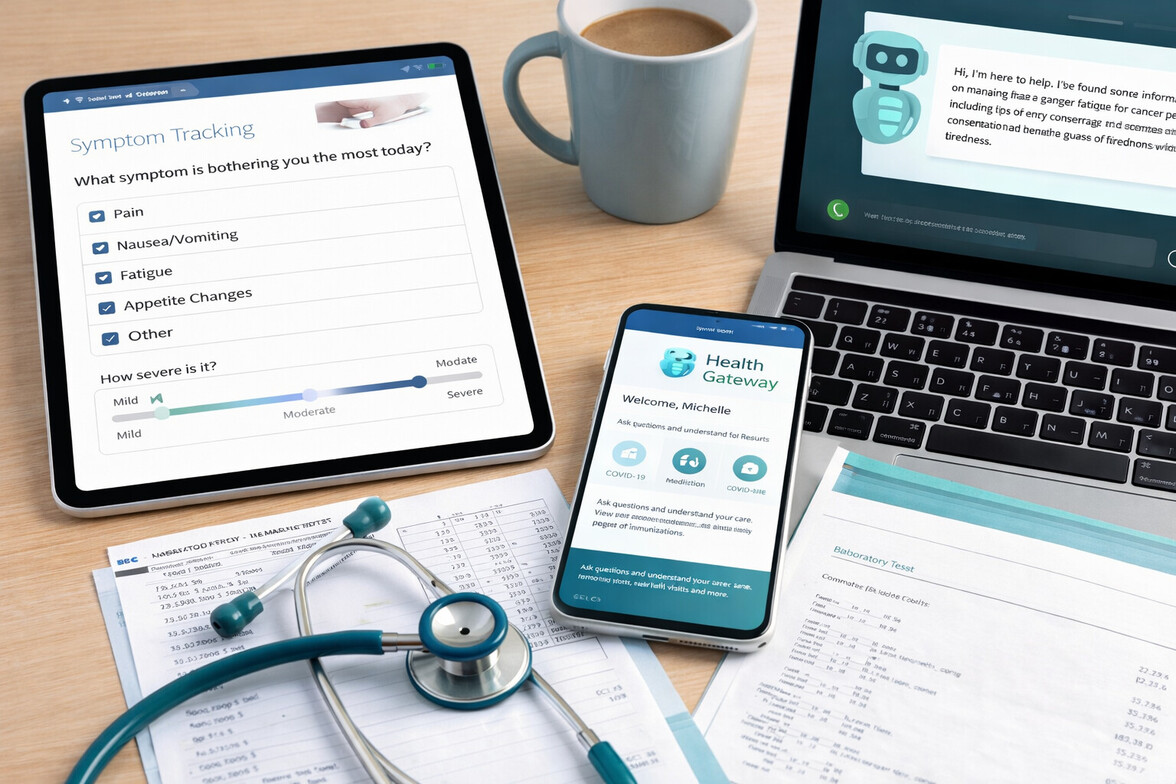
Digital symptom tools allow patients to report symptoms in real time, rather than trying to remember everything at the next clinic visit. This can help care teams recognize patterns earlier and respond before problems become more serious.
Why it helps
Reporting symptoms early can support faster intervention, better symptom control, and fewer avoidable urgent care visits.
Between visits
Digital monitoring can help patients feel supported between appointments, especially when symptoms change suddenly or questions arise at home.
AI-Supported Insights
Artificial intelligence can help patients and caregivers find evidence-based information, better understand common symptoms, and organize questions for appointments. It may also help identify possible risks earlier when used within appropriate clinical systems.
At the same time, AI is only a tool. It does not replace the judgment of experienced oncology professionals, who remain essential in interpreting symptoms, understanding the full clinical picture, and guiding safe care decisions.
Access to Health Records in British Columbia
One of the most important changes for patients in British Columbia has been improved online access to personal health information. For many patients and families, this has been a game changer.
Being able to review parts of the health record online can help patients better understand their care, follow their treatment journey more closely, and prepare questions between appointments. It can also be helpful for trusted family members or community agencies supporting them.
Patients may be able to view
- Lab results
- Medication history
- Immunizations
- Some reports and visit information
Why this matters
- Helps patients feel more informed
- Supports better question preparation
- Improves continuity between visits
- Can assist families and support agencies
Medical information can still be difficult to interpret on your own. Questions about results, symptoms, or treatment decisions should always be discussed with your healthcare team.
Patient Resources
The following resources may help patients and families access information, understand supportive care, and stay connected to trusted sources of guidance.
Trusted BC Resources
- BC Health Gateway Access parts of your personal health information online.
- BC Cancer Patient Resources Information on treatment, side effects, symptom support, and patient services.
Technology Works Best When Combined with Human Care
The best supportive care combines timely information, skilled clinical judgment, and compassionate human support. Digital tools can help identify problems earlier, but people still need experienced professionals who understand both the science of treatment and the lived experience of illness.
Good supportive care is proactive, personal, and connected — both online and in real life.
Note:
This writing was prepared with the assistance of AI.

June Ng-A-Kein
Contact Me