.jpg)

Cancer treatment decisions often come at moments when patients and families are already under significant emotional stress. A new diagnosis, unexpected test results, or changes in treatment plans can quickly lead to difficult choices that feel complex and time-sensitive.
While oncology teams work hard to explain treatment options, many patients leave appointments feeling that they still need time to reflect, review information, and organize their thoughts before the next conversation with their care team.
This is where decision support can play an important role.
What Is Decision Support?
Decision support refers to approaches that help patients better understand their options, clarify their priorities, and prepare for conversations with their healthcare providers.
In modern cancer care, many treatment choices are made through shared decision making — a process in which patients and clinicians work together to consider:
-
potential benefits of treatment
-
possible side effects and risks
-
how treatment may affect daily life
-
the patient’s personal goals and values
Shared decision making does not mean patients are left to make decisions alone. Rather, it means decisions are made through partnership and thoughtful dialogue.
Why Decision Support Matters
Cancer care often involves complex medical information. Patients may be asked to consider several different treatment approaches, each with its own potential benefits and risks.
At the same time, patients may be experiencing symptoms, emotional stress, and uncertainty about the future.
Research consistently shows that patients who feel informed, supported, and prepared for decision conversations are more likely to:
-
feel confident in their choices
-
experience less decisional regret
-
engage more actively in their care
-
communicate more clearly with their healthcare team
Decision support is not about influencing decisions. It is about helping patients feel prepared to participate in decisions that affect their lives.
The Growing Role of Digital Health
Today, patients have access to more information than ever before.
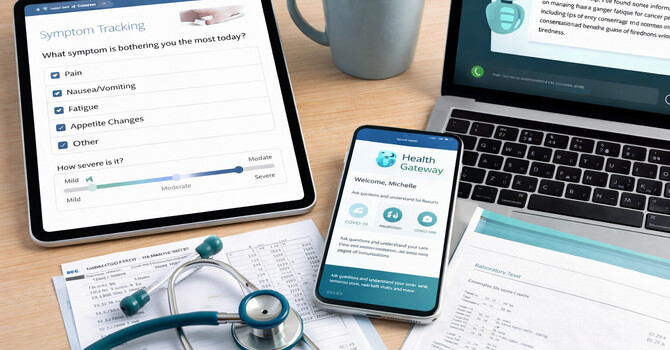
Online health portals allow patients to review laboratory results, imaging reports, and treatment information. Many cancer programs also use Patient-Reported Outcome Measures (PROMs) — digital questionnaires that allow patients to report symptoms between clinic visits.
Artificial intelligence tools and online medical resources can also help patients explore health information or prepare questions.
However, access to information does not always make decision-making easier.
Patients may find themselves wondering:
-
What does this result actually mean for me?
-
How do I interpret information from online sources or AI tools?
-
Which questions should I ask my doctor at my next appointment?
Supportive conversations between visits can help patients organize information, clarify uncertainties, and prepare for meaningful discussions with their care team.
The Value of Time to Reflect
One of the most helpful aspects of decision support is simply creating space to pause and reflect.
Medical appointments are often busy, and patients may only realize later which questions they wanted to ask.
Taking time between visits to think through information can help patients:
-
identify their priorities
-
reflect on concerns or fears
-
prepare questions for upcoming appointments
-
better understand how different options might affect daily life
These reflections can make conversations with healthcare providers more productive and focused.
Supporting Patients Between Clinic Visits
Supportive care conversations can help patients navigate the period between appointments — a time when many questions arise.
This may include:
-
reviewing educational resources together
-
discussing symptom experiences or concerns
-
reflecting on personal values and goals
-
preparing questions for the oncology team
Importantly, these conversations do not replace medical advice. Treatment decisions should always be made in consultation with the patient’s healthcare providers.
Instead, decision support can help patients feel more confident and prepared when those conversations occur.
A Whole-Person Perspective
Decision making in cancer care is rarely purely medical. It often involves emotional, relational, and practical considerations as well.
This perspective aligns closely with the Medicine of the Person approach described by Swiss physician Dr. Paul Tournier, which emphasizes seeing each patient as a whole person — not simply a diagnosis.
Listening carefully to a patient’s experiences, values, and concerns can be an essential part of supporting thoughtful and meaningful decision making.
Moving Forward with Confidence
Cancer care is a journey that often unfolds step by step. Decisions may evolve over time as new information becomes available or circumstances change.
Having space to reflect, ask questions, and explore what matters most can help patients move forward with greater clarity and confidence.
Decision support is ultimately about helping patients feel informed, supported, and prepared as they work with their healthcare team to navigate the path ahead.
Final Note
Decision support conversations are not a substitute for medical care. Patients should always seek advice from their oncology team regarding treatment decisions and urgent medical concerns.
Supportive care can, however, help patients feel more confident and prepared for those important conversations.
A Note on Writing
This reflection was crafted with the assistance of AI.

June Ng-A-Kein
Contact Me