.jpg)

Constipation: What It Is, What to Do, and When to Get Help
Constipation is one of the most common symptoms experienced by people living with cancer and defintely one of the most common reason patients call into the cancer clinic, anxious and seeking advice. It is often defined as a change from your usual bowel pattern that may include fewer bowel movements than your normal pattern, and may include harder or more difficulty passing stool. It may also include a feeling of not completly emptying your bowels, and may be accompanied by bloating and abdominal discomfort. Constipation can occur because of cancer treatments, medications, reduced activity, changes in eating or drinking habits, dehydration, or the cancer itself.
Many people are surprised to learn that constipation can become serious if it is not addressed early. The good news is that most constipation can be managed successfully when symptoms are recognized and treated promptly.
Why Constipation Matters
Constipation is more than simply "not going often enough."
It can affect appetite, energy, sleep, comfort, and quality of life. Severe constipation can lead to nausea, vomiting, abdominal pain, hemorrhoids, bowel obstruction, or fecal impaction requiring urgent medical treatment.
This is why cancer teams encourage patients to pay attention to bowel habits and report changes early.
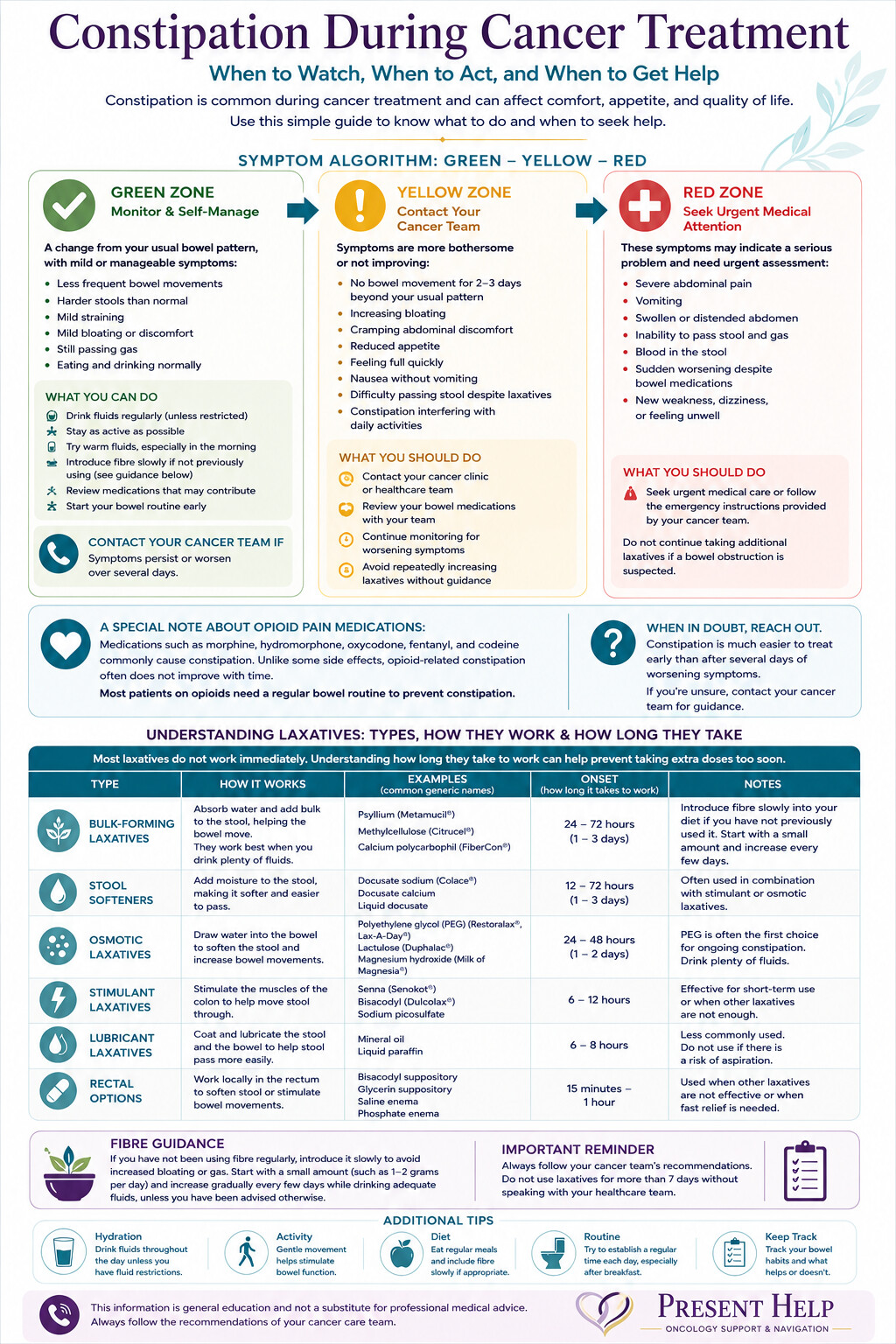
The following chart aims to provide a quick reference so that patients and those supporting them, can be better informed about constipation during cancer treatment. I hope it relieve some of the anxiety around constipation management so that you can be confident in knowing the simple things you can do at home to help prevent constipation, learn about the different types of laxatives that you may be recommended by your care team to use, and be aware of the red flags to look out for that require immediate medical attention.
A Note on Writing
AI was used to assist with drafting, editing and formatting.

June Ng-A-Kein
Contact Me