.jpg)




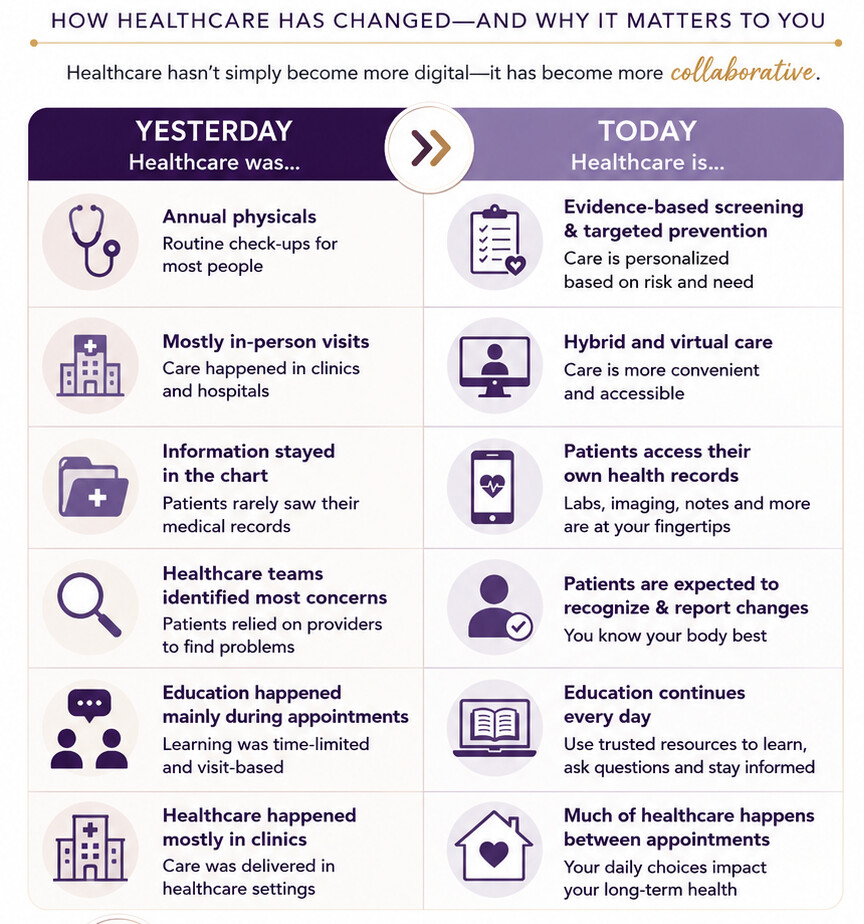
“Healthcare hasn’t simply become more digital—it has become more collaborative.”
Have You Noticed? Healthcare Has Quietly Changed.
If you haven’t noticed, you’re not alone.
Over the past two decades, Canadian healthcare has undergone one of its most significant transformations—not through one dramatic announcement, but through hundreds of small changes that have quietly reshaped how care is delivered.
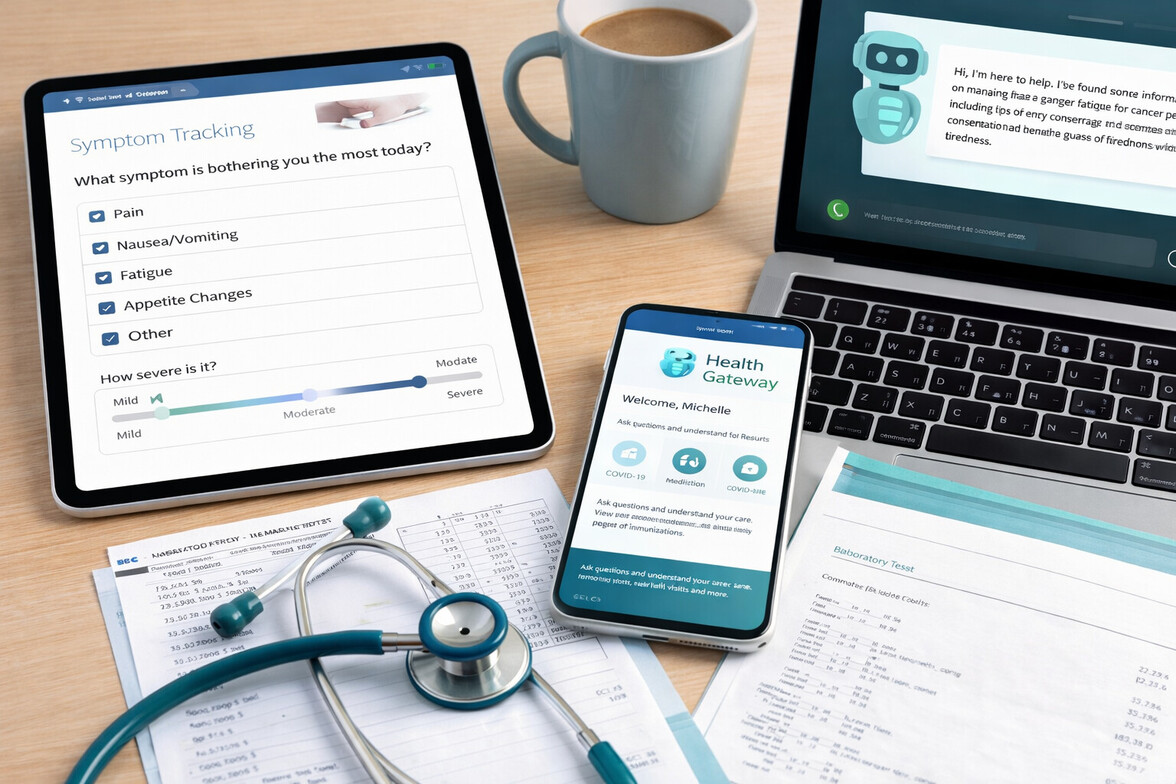
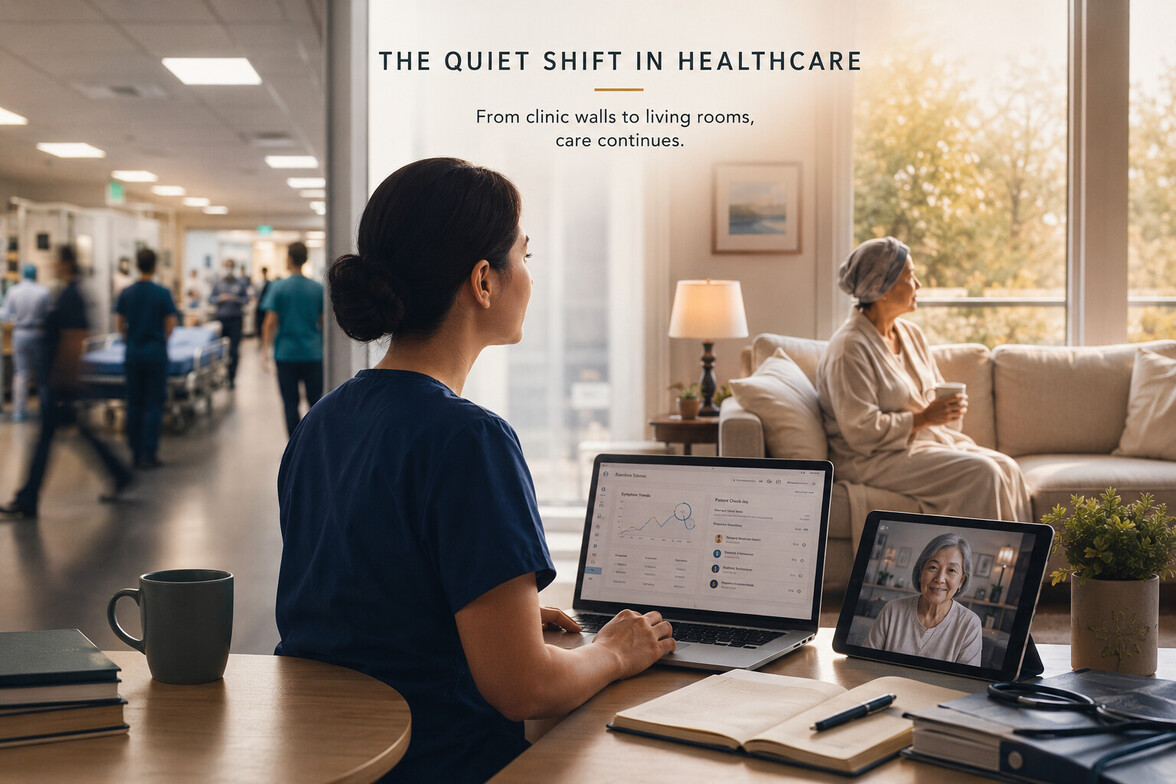
Appointments are often shorter. Virtual visits have become commonplace. Patients can now access laboratory results, imaging reports, consultation notes, and appointment schedules online. Evidence-based screening has replaced many routine annual physical examinations for healthy adults. Hospital stays are shorter, and more care is delivered in outpatient clinics or at home.
Many of these changes have improved access, efficiency, and the use of evidence-informed medicine. Yet together, they have created a new reality that many Canadians may not fully recognize.
Healthcare increasingly depends on informed partnerships between patients and healthcare professionals.
At the Same Time, Our World Is Becoming More Complex
While healthcare delivery has evolved, so too have the challenges affecting our health.
Canadians today are navigating increasingly sedentary lifestyles, higher rates of obesity, chronic stress and burnout, mental health challenges, alcohol and substance use, environmental exposures, and an overwhelming amount of health information online—some reliable, much of it not.
Our understanding of health risks has also evolved. For example, research now tells us that no amount of alcohol consumption is completely risk-free when it comes to cancer.
This isn’t meant to create fear. It is a reminder that science continues to evolve—and so should our understanding of health.
Ironically, while healthcare has become more evidence-informed, the factors influencing our health have become increasingly complex.
The Biggest Shift: Healthcare Is Becoming a Partnership
Perhaps the greatest transformation has received the least attention.
Healthcare is no longer something that simply happens during a medical appointment. Much of it now happens between appointments.
Today’s healthcare system increasingly depends on people becoming informed partners in their own health. That means:
- understanding personal health risks;
- making informed lifestyle choices;
- participating in recommended screening;
- recognizing and reporting persistent symptoms;
- preparing questions before appointments;
- understanding medications and treatment plans;
- accessing and understanding electronic health records;
- finding trustworthy health information; and
- speaking up when something does not feel right.
This isn’t about transferring responsibility from healthcare professionals to patients. It is about recognizing that the best outcomes increasingly come from informed partnerships.
Knowledge Is No Longer Kept Behind the Curtain
One of the most remarkable changes in healthcare is that patients now have unprecedented access to their own health information.
Many Canadians can review laboratory results, imaging reports, pathology reports, consultation notes, medication lists, and appointment schedules. Sometimes they receive this information before speaking with a healthcare provider.
This transparency is empowering. But access to information is not the same as understanding it.
Medical terminology can be confusing. Internet searches can be contradictory. Artificial intelligence can summarize information—but it cannot replace individualized clinical assessment or shared decision-making.
Health literacy—the ability to find, understand, evaluate, and apply trustworthy health information—is becoming one of the most important life skills of the digital age.
Why Education Matters More Than Ever
Education has always been part of good healthcare. Today, it is becoming one of its foundations.
As healthcare professionals, we cannot assume people automatically know what symptoms deserve medical attention, how lifestyle influences long-term health, how to interpret health information, how to prepare for appointments, or how to navigate an increasingly complex healthcare system.
Likewise, people should not have to figure everything out alone.
Education, coaching, navigation, and ongoing support have never been more valuable.
Why Nurse-Led Organizations Are Emerging
Healthcare has evolved. So has nursing.
Across Canada, nurse-led organizations are helping bridge the growing space between healthcare visits through evidence-informed education, symptom assessment and guidance, care navigation, appointment preparation, health coaching, support understanding medical information, continuity, and reassurance.
These services do not replace family physicians, specialists, or other healthcare professionals. They strengthen healthcare by helping people become informed, prepared, and confident partners in their care.
Looking Ahead
Artificial intelligence, remote monitoring, virtual care, wearable technology, and digital health platforms will continue transforming healthcare.
Yet one thing is unlikely to change.
People will always need trusted healthcare professionals who can help them interpret information, recognize meaningful changes, ask informed questions, and make confident decisions.
The future of healthcare is about informed, prepared, and empowered people working in partnership with their healthcare team.
The Present Help Perspective
Healthcare has changed quietly, but its implications are profound.
As care becomes more digital, more evidence-informed, and increasingly delivered beyond the walls of hospitals and clinics, people need more than access to healthcare.
They need the knowledge, confidence, and support to navigate it.
At Present Help, we believe the future of healthcare isn’t simply treating illness—it’s empowering informed, prepared, and confident people to become active partners in their own health.
About the Author
June Ng-A-Kein, RN, CON(C) is the Founder of Present Help, a specialized oncology nursing practice dedicated to providing evidence-informed education, symptom guidance, care navigation, and compassionate support between healthcare visits.
With more than two decades of oncology nursing experience, June is passionate about improving health literacy, empowering patients, and helping individuals confidently navigate today’s evolving healthcare system.
This article is intended for educational purposes only and should not replace advice from your healthcare provider. If you have persistent symptoms or concerns about your health, please consult your healthcare team.



.jpg)
