.jpg)

Diarrhea During Cancer Treatment: Should You Avoid Fibre?
When diarrhea develops during cancer treatment, one of the first pieces of advice people often hear is:
“Avoid fibre.”
But that advice may be too simple.
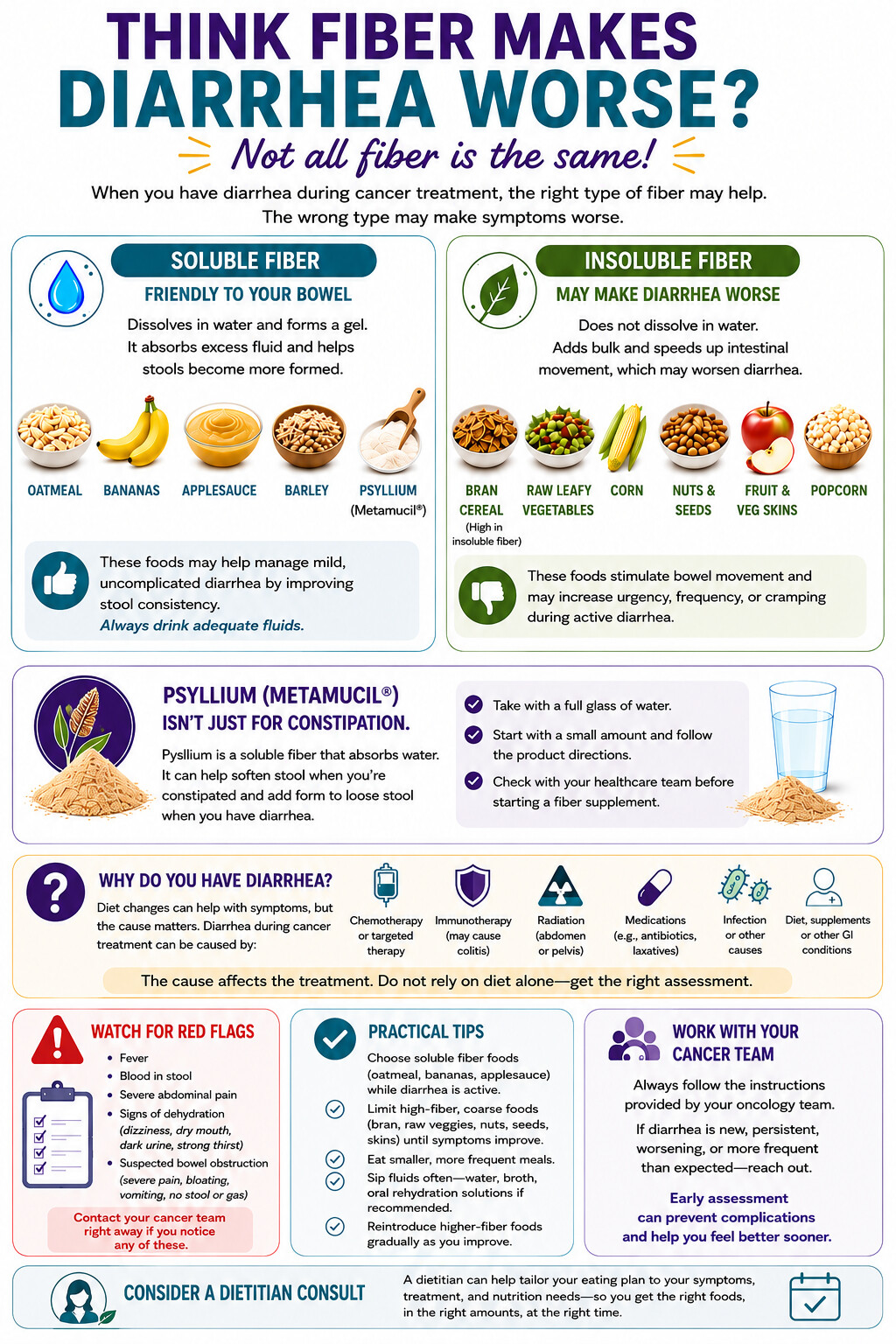
Fibre is not all the same. Some types of fibre can increase bowel activity and may make diarrhea worse, while other types absorb water and may actually help make loose stools more formed.
Understanding the difference can help you make better food choices while your bowel is recovering.
Soluble vs. insoluble fibre: what is the difference?
Soluble fibre dissolves in water and forms a soft, gel-like substance in the intestine. This can help absorb excess fluid and may slow intestinal transit, helping stools become more formed.
Foods containing soluble fibre include:
-
oatmeal and oats
-
bananas
-
applesauce
-
barley
-
psyllium fibre, such as Metamucil®
These foods may be easier to tolerate during mild, uncomplicated diarrhea, depending on its cause and your individual situation.
Insoluble fibre, on the other hand, adds bulk to stool and can stimulate movement through the intestine. During active diarrhea, large amounts may sometimes make urgency, frequency or cramping worse.
Examples include:
-
bran and high-bran cereals
-
raw leafy vegetables
-
corn
-
nuts and seeds
-
fruit and vegetable skins
-
popcorn
Temporarily reducing these foods may be helpful until symptoms improve.
An unexpected example: oatmeal
Oatmeal may seem like an unusual food to recommend when someone has diarrhea because we tend to associate fibre with keeping the bowels moving.
However, oats contain beta-glucan, a type of soluble fibre that absorbs water and forms a gel in the digestive tract.
This is why a bowl of well-cooked oatmeal may be better tolerated than a bowl of bran cereal when your stools are loose.
Preparation matters too. Plain, well-cooked oatmeal is generally a different choice from oatmeal loaded with nuts, seeds, dried fruit or other ingredients that may be harder to tolerate during active diarrhea.
What about Metamucil®?
Another surprise is psyllium, commonly known by the brand name Metamucil®.
Many people think of psyllium only as something used for constipation. In fact, psyllium is predominantly soluble fibre and absorbs water in the intestine.
That means it can have a stool-normalizing effect: helping soften stool when someone is constipated while potentially adding form to loose stool when diarrhea is present.
However, this does not mean everyone with diarrhea should start taking psyllium.
It is important to drink adequate fluids with psyllium, and it may not be appropriate if there is concern about bowel obstruction or certain other gastrointestinal problems. During cancer treatment, check with your oncology team, nurse, pharmacist or dietitian before starting a fibre supplement.
The most important question is: Why do you have diarrhea?
Dietary changes can help manage symptoms, but they should never replace assessment of the underlying cause.
During cancer treatment, diarrhea can occur for many reasons, including:
-
chemotherapy
-
immunotherapy
-
targeted therapies
-
radiation involving the abdomen or pelvis
-
antibiotics or other medications
-
laxatives or stool softeners
-
infection
-
changes in diet or supplements
-
other gastrointestinal conditions
The cause matters because treatment can be very different.
For example, diarrhea caused by an immune checkpoint inhibitor may represent immune-mediated colitis. This requires medical assessment and may need treatment rather than dietary management alone.
Similarly, severe chemotherapy-related diarrhea, infection or bowel obstruction should not be managed simply by changing what you eat.
Know when to contact your cancer team
Contact your oncology team promptly if diarrhea is new, persistent, worsening, or more frequent than you have been instructed to expect.
Seek medical advice urgently if diarrhea is accompanied by concerning symptoms such as fever, blood in the stool, significant abdominal pain, dizziness or signs of dehydration, inability to maintain fluids, marked weakness, or symptoms that could suggest bowel obstruction.
If you are receiving immunotherapy, make sure your healthcare provider knows this when you report new or worsening diarrhea.
Your cancer centre may have specific instructions about when to call based on the treatment you are receiving. Those instructions should always take priority.
A practical approach
If your cancer team has determined that your diarrhea is mild and appropriate for dietary self-management, consider choosing gentle foods containing soluble fibre while temporarily limiting foods high in coarse, insoluble fibre.
Continue to pay attention to hydration and follow any recommendations provided by your oncology team regarding fluids, electrolyte replacement or anti-diarrheal medications.
As symptoms improve, foods that were temporarily reduced can usually be gradually reintroduced rather than unnecessarily avoided long term.
Present Help Perspective
“Avoid fibre” isn't always the whole story.
Sometimes the more useful question is:
What kind of fibre — and what is causing the diarrhea?
Soluble fibre from foods such as oatmeal, bananas or applesauce may be helpful for some people with mild diarrhea, while coarse insoluble fibre may temporarily worsen symptoms.
But nutrition is only one part of diarrhea management during cancer treatment.
Assess the cause. Watch for red flags. Stay hydrated. And make sure your cancer team knows when symptoms are new, persistent or worsening.
This information is intended for general education and supportive care and does not replace individualized assessment or advice from your oncology team. Cancer treatments and individual circumstances differ; always follow the instructions provided by your cancer centre.
About this article: This article was researched and written by Present Help with the assistance of artificial intelligence (AI) as a writing and research support tool. All content has been reviewed, edited, and clinically interpreted by an experienced oncology nurse to ensure it reflects current evidence and practical, patient-centered guidance. AI was used to assist with drafting and language refinement—it did not replace professional clinical judgment.

June Ng-A-Kein
Contact Me