For Patients & Families
Supportive Care: Common Side Effects
Cancer treatment can cause different side effects depending on the type of treatment, the dose, and the individual. Some symptoms are mild and can be managed at home, while others need medical attention sooner.
This page offers a simple overview of common side effects, practical self-care strategies, and reminders about when to contact your healthcare team.
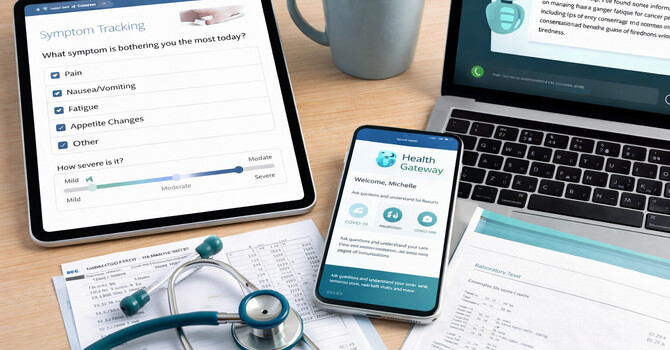
Many symptoms happen at home between clinic appointments. Supportive conversations can help patients recognize symptom patterns, review evidence-informed self-care strategies, and prepare to communicate concerns clearly with their healthcare team.
These conversations do not replace medical care or urgent assessment. They help patients and families feel more informed and supported between visits.
Constipation
What it is
Constipation means having bowel movements less often than usual, having hard stools, or difficulty passing stool. It can occur during cancer treatment because of medications, changes in diet, reduced activity, or lower fluid intake.
What may help
Drinking fluids regularly if appropriate, staying as active as possible, gradually increasing fibre when tolerated, and using bowel medications recommended by your healthcare team may help.
When to contact your care team
Contact your care team if constipation lasts several days, becomes painful, or is associated with vomiting, bloating, or abdominal pain.
How we support you between visits
Together we may review medications that contribute to constipation, discuss daily routines that support bowel health, and explore evidence-informed self-care strategies. These conversations can help patients feel more confident managing symptoms at home and knowing when to contact the oncology team.
Nausea and Vomiting
What it is
Nausea is the feeling that you may vomit. Some patients also have vomiting. These symptoms may happen during or after treatment and can affect eating, drinking, and overall energy.
What may help
Taking anti-nausea medicines as prescribed, eating small frequent meals, choosing bland foods, and drinking fluids in small amounts may help reduce symptoms.
When to contact your care team
Contact your care team if vomiting is persistent, you cannot keep fluids down, or you feel dizzy or weak.
How we support you between visits
We may review how anti-nausea medications are being used, identify patterns that trigger symptoms, and discuss strategies that may help prevent nausea before it becomes more severe.
Fatigue
What it is
Fatigue is one of the most common side effects of cancer and its treatment. It can affect energy, concentration, and daily activities.
What may help
Balancing rest with gentle activity, maintaining nutrition and hydration, and conserving energy for important tasks may help manage fatigue.
When to contact your care team
Contact your care team if fatigue becomes severe, sudden, or associated with dizziness, shortness of breath, or chest discomfort.
How we support you between visits
We may explore ways to balance rest and activity, prioritize daily tasks, and identify practical strategies that help conserve energy during treatment.
Seek medical advice promptly for fever, trouble breathing, chest pain, confusion, uncontrolled vomiting, severe diarrhea, bleeding, severe pain, or sudden worsening of your condition.
Related Reading
You may wish to explore blog articles and other supportive care resources for more detailed guidance on managing symptoms during treatment.
Blogs
Recent articles from the blog.