.jpg)
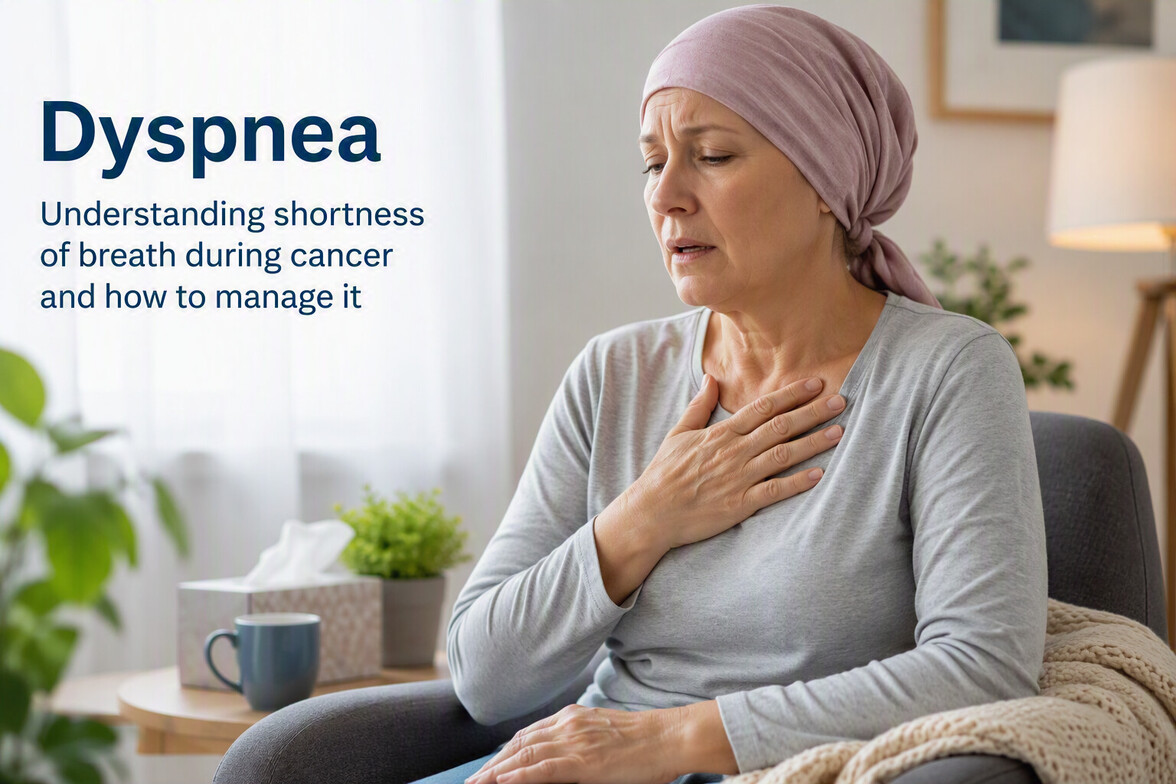
Self-Care Strategies for Mild to Moderate Shortness of Breath (Dyspnea)
When you start to feel short of breath
1. Improve airflow and adjust your position
Try the following to make breathing feel easier:
- Sit upright in a chair or bed.
- Lean slightly forward with your arms supported on a table, countertop, or pillows.
- If lying flat makes your breathing worse, raise the head of your bed or use extra pillows.
- Direct cool air toward your face using a handheld fan.
- Open a window or move to an area with fresh airflow if available.
2. Slow and control your breathing
Focus on relaxed breathing techniques:
Pursed-lip breathing
- Breathe in slowly through your nose.
- Purse your lips as if you are gently blowing out a candle.
- Breathe out slowly through your pursed lips for longer than you breathed in.
Diaphragmatic (belly) breathing
- Place one hand on your abdomen.
- Breathe in slowly through your nose, allowing your abdomen to rise.
- Breathe out slowly and gently.
You may also find relaxation techniques helpful, such as:
- Guided imagery
- Mindfulness exercises
- Listening to calming music
- Progressive muscle relaxation
These strategies can help reduce anxiety and stress, which may make breathlessness feel worse.
Conserve your energy throughout the day
To reduce activities that trigger shortness of breath:
- Keep frequently used items within easy reach.
- Plan activities ahead of time and take regular rest breaks.
- Set up rest stations, such as a chair near the shower or along a hallway.
- Cook larger meals when you have more energy and freeze portions for later.
- Ask family or friends for help with shopping, cleaning, lifting, or other strenuous tasks.
- Avoid lifting heavy objects (greater than 10 lb or 5 kg whenever possible).
Stay active within your limits
Regular gentle activity can help maintain strength and reduce deconditioning.
- Walk or perform light activities as tolerated.
- Pace yourself and stop to rest when needed.
- Gradually increase activity only if your symptoms remain manageable.
Create a comfortable environment
- Wear loose, comfortable clothing that does not restrict your chest or abdomen.
- Stay comfortably cool in hot weather and warm in cold weather.
- Avoid exposure to:
- Cigarette smoke
- Strong odors or perfumes
- Cleaning fumes
- Air pollution when possible
- Extreme temperatures
- Saunas, steam rooms, and chlorinated pools if they worsen symptoms
Avoid activities that can worsen shortness of breath
Try not to:
- Hold your breath during activities.
- Rush through tasks.
- Overexert yourself.
- Ignore early signs of increasing breathlessness.
Seek urgent medical attention if:
- Your shortness of breath suddenly becomes severe.
- You are short of breath at rest and it is not improving.
- You develop chest pain, dizziness, confusion, bluish lips or fingertips, or new severe symptoms.
- Your breathing feels significantly worse than usual.
Sources
- BC Cancer. Breathlessness (Dyspnea) Patient Handout and Symptom Management Resources. [bccancer.bc.ca]
- Canadian Cancer Society. Shortness of Breath (Dyspnea). [cancer.ca]
- Cleveland Clinic. Patient education resources on dyspnea and breathing techniques.
- Mayo Clinic. Patient education resources on shortness of breath and breathing exercises
Developed with AI assistance (Microsoft Copilot). Content informed by BC Cancer and Canadian Cancer Society patient education resources and is for education purposes only and does not replace your medical team's recommendations.
June Ng-A-Kein
Contact Me
.jpg)
